
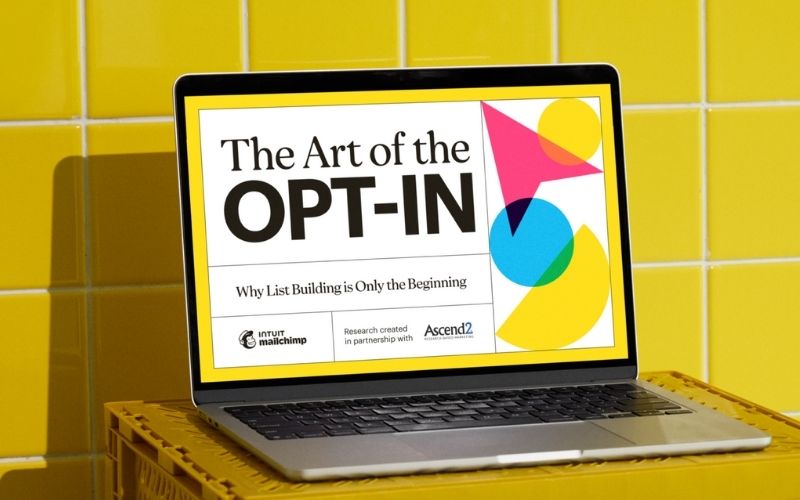
Intuit Mailchimp, in partnership with Ascend2, has released a comprehensive global report titled “The Art of the Opt-In: Why List Building is Only the Beginning.” The study, which surveyed thousands of marketers and consumers across the US, UK, Canada, Australia, and New Zealand (ANZ), highlights a growing “trust gap” in digital marketing strategies.
The findings indicate that while brands prioritise list volume, consumers—particularly in the ANZ region—are becoming increasingly selective about how they engage with marketing communications.
Low opt-In rates in Australia and New Zealand
According to the report, ANZ consumers exhibit the highest level of caution globally. Only 64% have opted into email marketing and 50% into SMS, the lowest rates among all surveyed markets. This reluctance poses a significant challenge for local businesses; 41% of ANZ marketers cited sign-up completion as their primary obstacle.
Anthony Capano, Regional Director, APAC at Intuit Mailchimp, noted that local shoppers are increasingly thoughtful about their digital privacy. “As inboxes and message threads get noisier, this research is an important reminder that timing, value, and transparency are key to building and maintaining consumer relationships,” Capano said.
The quality vs. quantity disconnect
Despite maintaining extensive contact lists, the report reveals a lack of confidence among marketing professionals:
- Less than one-third of marketers rate their lists as “very high quality.”
- Only 8% report conversion rates exceeding 20%.
- Just 21% of brands have fully automated their email and text campaigns.
Conversely, consumer attention is waning. While the volume of marketing messages has increased, only 40% of consumers say they are paying more attention, while 25% report tuning out these channels more than they did a year ago.
Friction points and trust thresholds
The data suggests that many brands overstep “trust thresholds” by requesting high-friction data too early. For instance, 65% of brands ask for phone numbers in popup forms, yet only 28% of consumers are willing to provide them.
“Most opt-ins come up short because they’re created only thinking about what the business needs, not what the customer actually wants,” said Matt Cimino, Product Manager at Intuit Mailchimp. The report suggests focusing on high-intent moments, noting that consumers are most likely to opt in while browsing (50%) or during checkout (39%).
Generational shifts and the role of automation
Trust levels vary significantly by age. Only 19% of Baby Boomers believe brands follow privacy laws, compared to 39% of Gen Z. For younger audiences, design is a trust signal: 43% of Gen Z respondents stated that clean, simple design makes them more comfortable completing an opt-in form.
The report identifies automation and omnichannel orchestration as the primary drivers of success:
- List quality Leaders: Brands with high-quality lists are three times more likely to use full automation.
- The omnichannel advantage: Brands with aligned messaging across channels report significantly higher value from organic and paid social media.
- Data Utilisation: Only 30% of marketers currently use preference or frequency data to tailor their outreach.
“Relevance comes from clarity, not volume,” said Diana Williams, Vice President of Product at Intuit Mailchimp. She emphasized that unifying fragmented data is essential for turning interactions into long-term growth.